
West Bengal's textile industry offers B2B buyers a blend of traditional craftsmanship and modern manufacturing. Explore market trends, sourcing clusters, and
West Bengal's Textile Industry: A B2B Sourcing Perspective
West Bengal's textile industry is recognized for its rich tradition and evolving manufacturing strengths, making it an important region for fabric sourcing in India. For garment manufacturers and sourcing teams, the state offers a broad selection of products, including handloom and industrial textiles. The combination of skilled artisans and modern production facilities supports a variety of fabric needs for apparel, uniforms, and export products.
Procurement professionals benefit from West Bengal's established clusters, which specialize in weaving, dyeing, and garment manufacturing. These hubs connect local expertise with wider supply chains, helping buyers match their requirements—such as GSM, width, and end use—with available capabilities. West Bengal continues to play a significant role in India's textile output, offering both scale and craftsmanship for bulk procurement.
To explore woven fabrics relevant to West Bengal's sourcing strengths, buyers can review the Woven Fabrics collection for suitable options.

Key Textile Clusters, Product Segments, and Market Trends
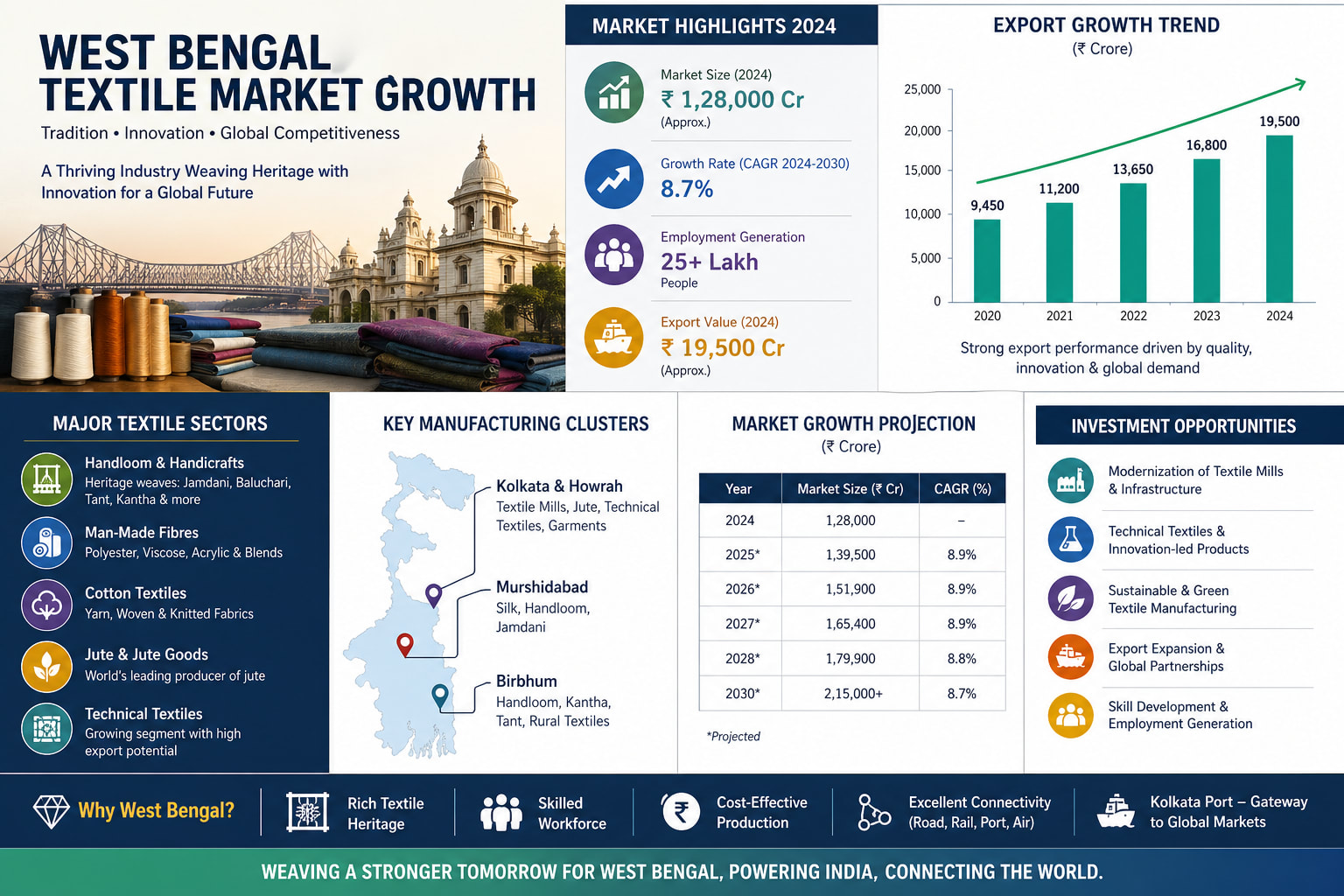
West Bengal's textile sector is shaped by major production hubs, each offering unique specializations for B2B buyers. Kolkata is known for textile processing and apparel manufacturing, while Murshidabad is recognized for silk and luxury fabrics. Birbhum stands out for its handloom clusters, and Siliguri is emerging in garment and industrial textiles. These clusters provide access to a wide range of products, including handloom sarees, powerloom fabrics, silk items, ready-made garments, and technical textiles.
For procurement teams, understanding each cluster's strengths helps in specifying requirements such as GSM, width, weave, and finishing. Handloom and powerloom fabrics from Birbhum are valued for their textures and traditional appeal, while technical textiles from Siliguri serve industrial applications. Buyers should share detailed specifications—including application, shade, and quantity—when starting discussions with suppliers in these regions.
Market trends show increasing demand for sustainable and authentic textiles, with brands seeking eco-friendly fabrics and traditional craftsmanship. West Bengal's sector is adapting by blending heritage techniques with modern production, creating opportunities for B2B buyers to source fabrics that meet quality and sustainability needs. The state's efficient production, local raw materials, and government support further strengthen its position in the textile supply chain.
Practical Sourcing Guidance and Next Steps
For B2B buyers considering West Bengal for fabric sourcing, aligning procurement needs with the region's strengths is essential. Start by defining your GSM, width, colour, quantity, and end use—whether for apparel, uniforms, or industrial applications. Engage with suppliers who understand the nuances of local clusters and can offer fabric options that match your requirements. Sampling, shade matching, and bulk approval processes are important checkpoints to ensure consistency and quality in repeat orders.
Amrita Global Enterprises supports buyers in reviewing suitable fabric options for their bulk requirements. To streamline your sourcing process, send a fabric inquiry or request samples by sharing your technical specifications and application details. This approach helps ensure you receive fabrics that align with your project needs and quality expectations. For ongoing sourcing, maintaining clear communication on delivery timelines, packing, and repeat-order consistency will support a reliable supply chain partnership.
